From right-of-way development to hydro testing, here are the pipeline construction standards that separate a reliable contractor from a risky one.
A pipeline is meant to run for decades, mostly out of sight and out of mind. That’s exactly why the construction phase matters so much — every shortcut taken underground becomes a maintenance problem, a safety risk, or a costly shutdown years later. For asset owners evaluating a pipeline contractor, the standards applied during construction are a better predictor of long-term reliability than almost anything else in the proposal.
Right-of-Way (ROW) Development Done Right
Before any pipe goes into the ground, the right-of-way has to be secured and prepared — land access agreements, environmental assessments, and coordination with landowners and communities along the route. Rushed ROW work tends to resurface later as disputes, rerouting costs, or environmental non-compliance. Done properly, it’s the foundation that everything downstream depends on.
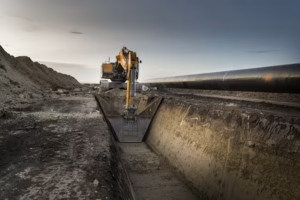
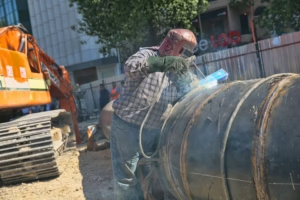
Pipeline Laying and Tie-Ins
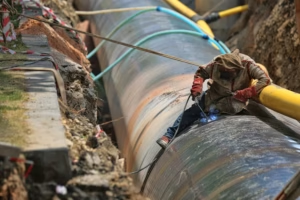
Precision matters here more than speed. Alignment, weld quality, and tie-ins — the connections between new pipeline segments and existing networks — all have to meet exact specifications, because a weak joint doesn’t fail immediately. It fails years later, usually at the worst possible time.
Testing Before Anything Goes Live
No section of pipeline should be commissioned without hydrostatic and pneumatic testing to confirm it can safely handle its intended operating pressure. This step exists specifically to catch problems before the pipeline is buried and put into service, when a fix is cheap, instead of after, when a fix means excavation, downtime, and potential contamination.
Coating, Wrapping, and Long-Term Corrosion Protection
Steel pipelines fail over time mainly due to corrosion, not sudden trauma. Proper coating and wrapping at the construction stage is what determines whether a pipeline lasts 15 years or 40. It’s an easy step to under-invest in because the payoff is invisible for the first decade — and expensive to have skipped in the second.
Maintenance: The Standard Most Contracts Forget
A pipeline contractor’s job doesn’t really end at handover. Ongoing maintenance — inspection schedules, leak detection, and repair response — is where the value of quality construction actually gets realized (or where the cost of poor construction gets discovered). Asset owners should ask not just “who builds it” but “who maintains it, and how.”